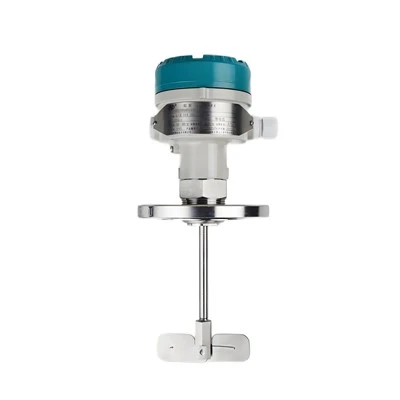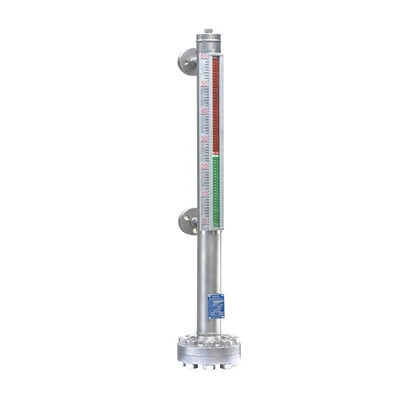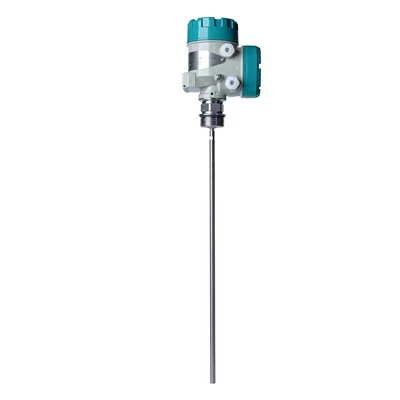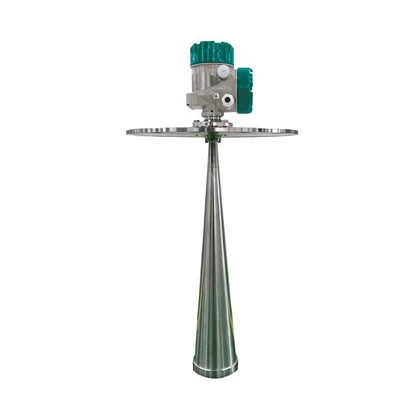
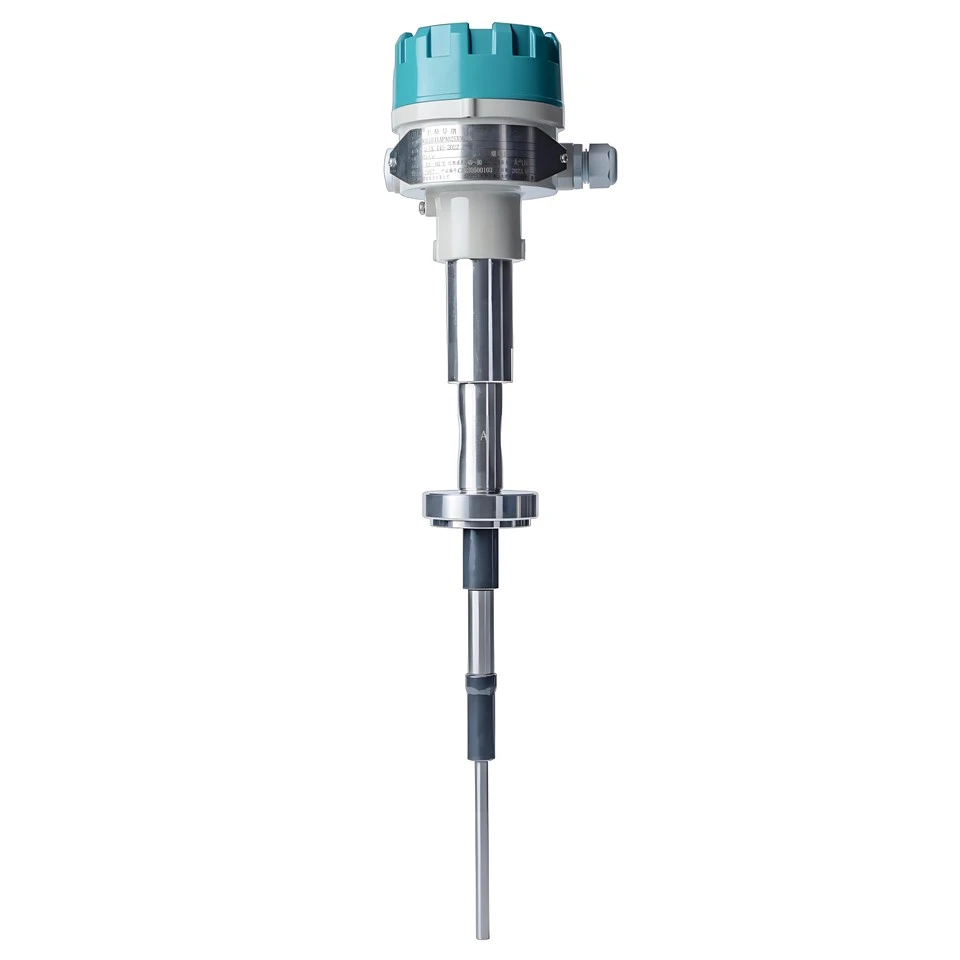
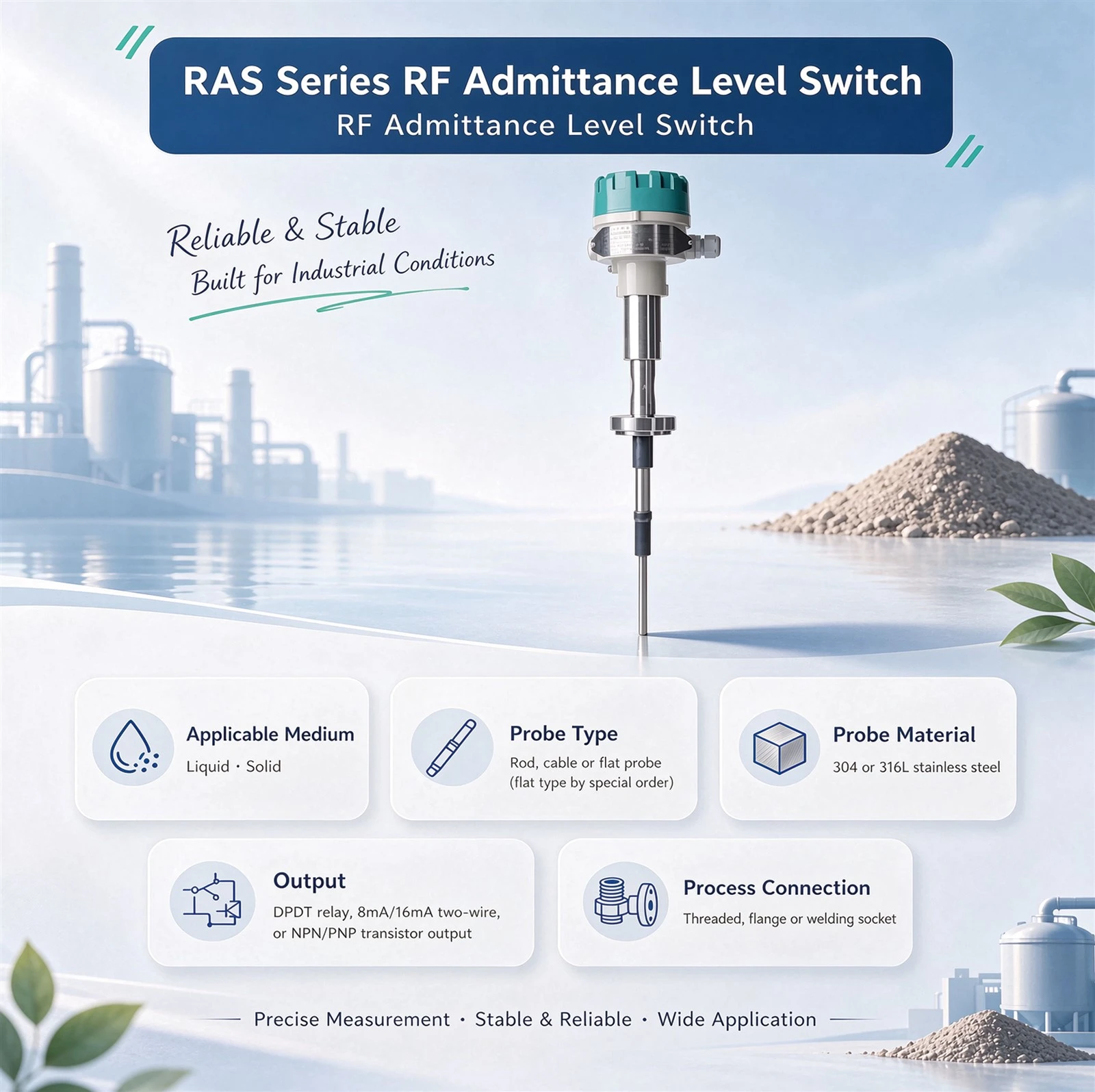
Why Choose the RF admittance level switch?
1. Anti-Buildup & False Alarm Prevention
Shield electrode design helps prevent false alarms caused by material buildup on the probe.
2. For Liquids, Slurries & Bulk Solids
Suitable for conductive and non-conductive liquids, slurries, powders, and granules.
3.Reliable in Demanding Conditions
No moving parts. Suitable for applications involving steam, foam, and agitation.
4.Flexible Probe & Installation Options
Rod, cable, and plate probes with top or side mounting and threaded or flanged connections.
RAS Series RF Admittance Level Switch Application Areas
The RF admittance level sensor is used for point-level detection in the following material categories:
| Material category | Examples in the source manual | Typical industries |
|---|---|---|
| Liquids | Conductive and non-conductive liquids | Chemical, oilfield, water and wastewater treatment |
| Slurries | Conductive and non-conductive slurries | Paper, pharmaceutical, water and wastewater treatment |
| Powders | Cement, fly ash | Power generation, metallurgy, cement |
| Granules | Coal, grain, feed, plastic pellets | Power generation, metallurgy, grain processing |
RF admittance level switch
Configuration Options
Probe Materials: 316L stainless steel, PTFE and other available options
Probe Types: Rod, cable, and plate
Process Connections: Threaded and flanged
Electrical Options: Multiple output configurations
Safety Options: Explosion-proof and intrinsically safe versions
Process Conditions: RF admittance level switch Configurations available for corrosive, high-temperature, and high-pressure applications
Probe Configuration Comparison
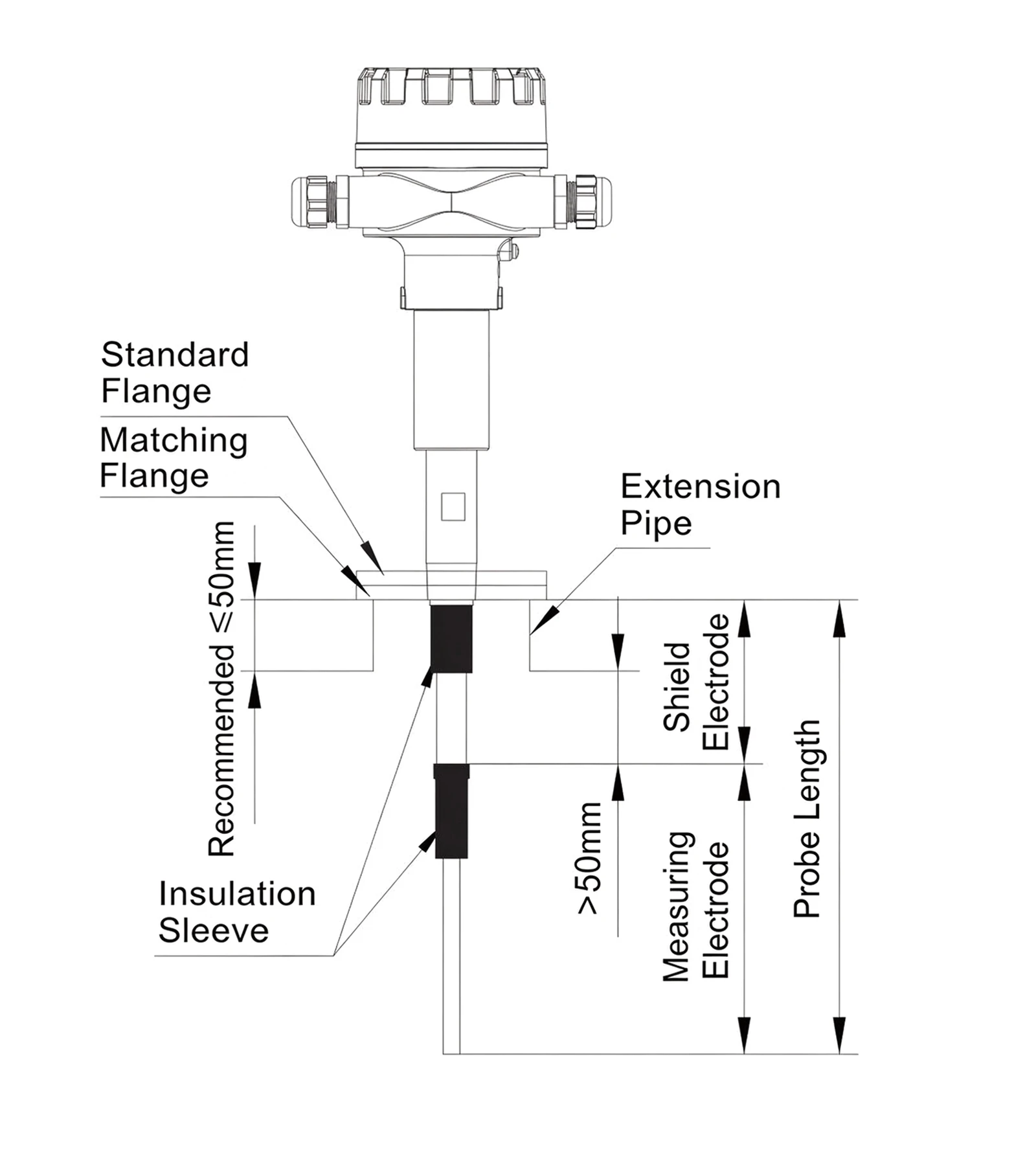
The RF admittance level detection provides different probe configurations to suit different installation and process requirements. The following table compares the configurations listed in the source manual.
| Configuration | Source-based description | Selection notes |
|---|---|---|
| Rod probe | Probe length: 0.15–1 m | Available for standard rod-type configurations |
| Cable probe | Probe length: 1–3.5 m | For applications requiring a longer probe |
| Flat probe | Special order | Confirm availability and application details before ordering |
| Corrosion-resistant / insulated configuration | Rod probe with PFA protection | Process temperature options limited to the specified D or F selections |
| High-temperature configuration | Temperature options up to 400°C, 800°C or 1200°C | These options have process-pressure and certification restrictions; see the selection notes below |
Important: The source manual does not provide separate performance ratings for the rod, cable and flat probe types. Choose the probe according to installation dimensions and process conditions rather than assuming one type has higher accuracy or sensitivity.
RAS Series RF Admittance Level Switch Technical Specifications
| Parameter | Specification |
|---|---|
| Operating voltage | 18–36 V DC (output ripple below 100 mVp-p); 90–265 V AC, 50/60 Hz |
| Power consumption | <0.8 W at 24 V DC; <5 VA at 240 V AC |
| Output options | DPDT relay; 8 mA/16 mA two-wire; NPN/PNP transistor |
| Relay contact capacity | 5 A / 250 V AC |
| Alarm delay | Adjustable from 0 to 20 s |
| Measurement range | 0.2 pF–100 nF |
| Resolution | 0.01 pF |
| Stability | 0.01%/°C |
| Maximum process pressure | 63 kgf/cm² |
| Process temperature | -40°C to 1200°C; special customization is required above 230°C |
| Ambient temperature | -40°C to 80°C for standard ambient conditions; low-temperature option: -60°C to 80°C |
| Enclosure protection | IP66 / IP67 |
| Process connection | Threaded or flanged |
| Cable entry | M20 × 1.5 or 1/2" NPT internal thread |
| Cable outer diameter | 6–12 mm |
Load capacity:
Standard-temperature RF admittance probe: ≤51 Nm lateral load
High-temperature RF admittance probe: ≤215 Nm lateral load
Cable-type RF admittance probe: ≤20 kN tensile force
Note: Ambient temperature for explosion-proof versions is subject to the relevant explosion-proof certificate.
Working Principle
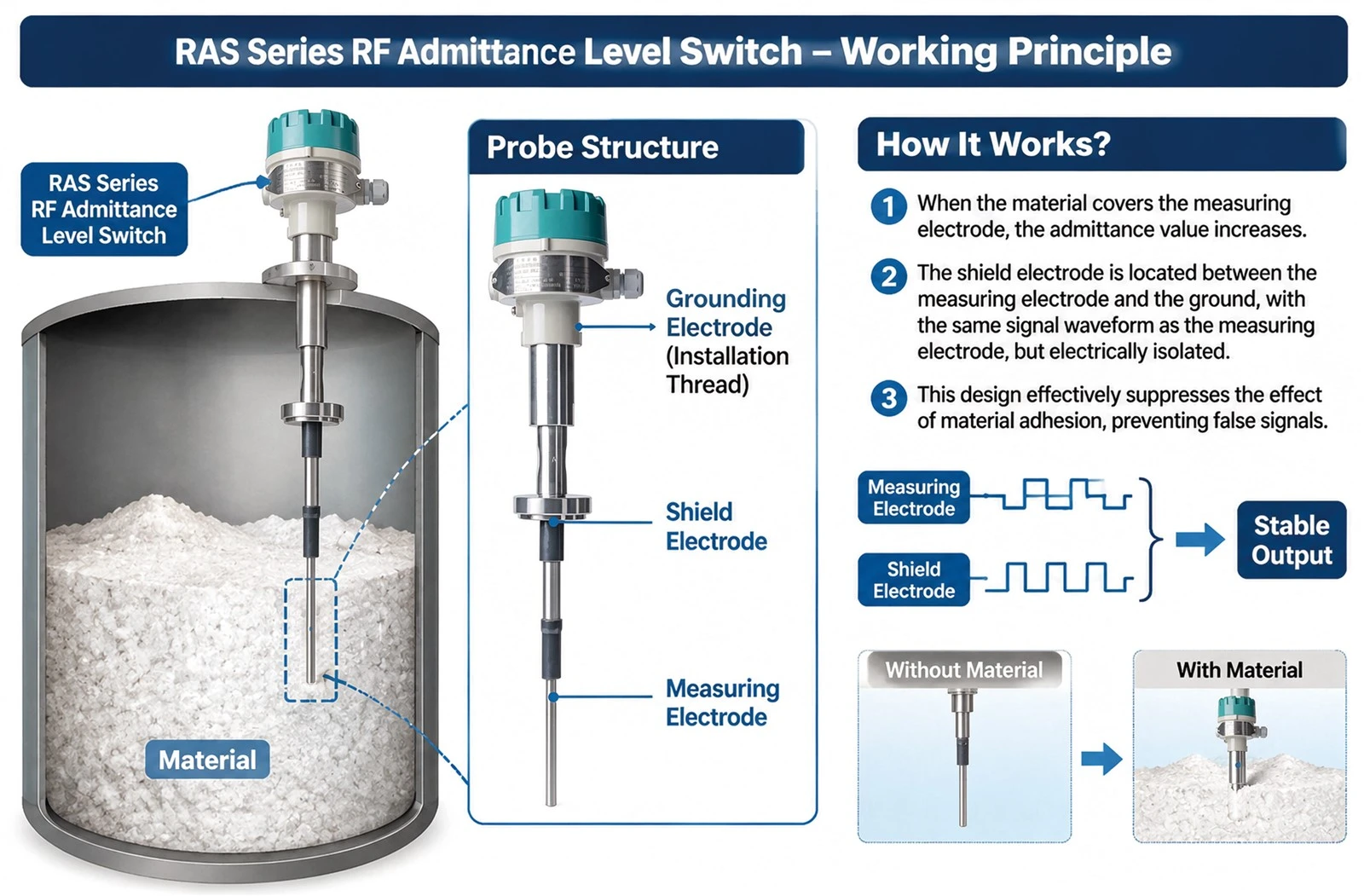
The RF admittance level switch consists of a measuring electrode, a shield electrode and a grounding electrode.
When the material reaches and covers the measuring electrode, the admittance value increases. The instrument detects this change and generates a switching signal or alarm current signal.
The shield electrode is positioned between the measuring electrode and the grounding electrode. Its signal waveform matches that of the measuring electrode while remaining electrically isolated. This design helps suppress the effect of material buildup on the probe and reduces false signals.
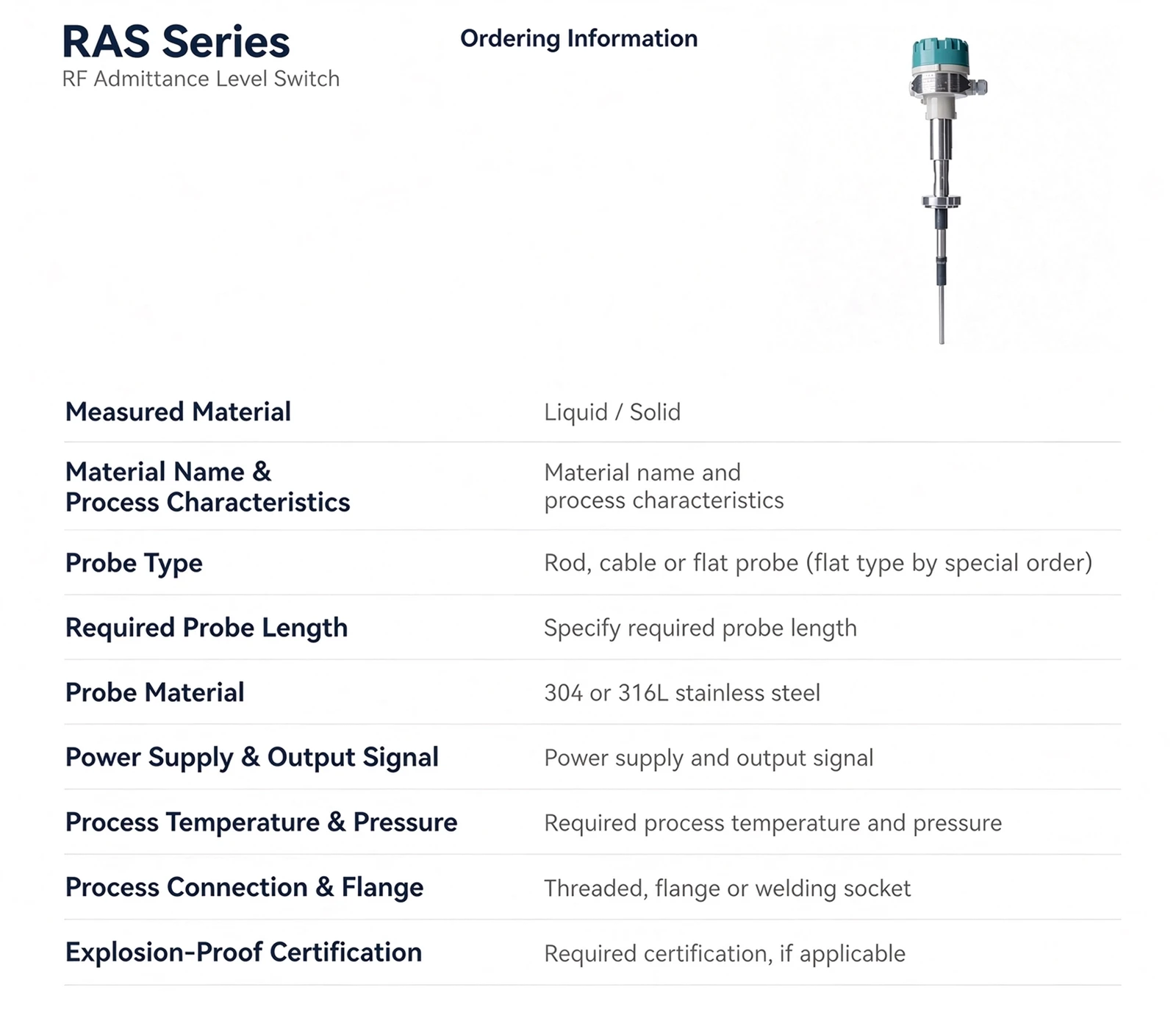
Need Help Selecting the Right Industrial level switch Configuration?
Please share your material type, operating temperature, pressure, and installation requirements. As RF admittance level switch manufacturer,we can help you identify a suitable RAS configuration.
Frequently Asked Questions
Can the RAS switch detect both liquids and solids?
+
-
Yes. Our RF admittance switch for liquids also detect for solids.The source also lists conductive and non-conductive liquids, slurries, powders and granules as typical applications.
Does material buildup affect the measurement?
+
-
The shield-electrode design helps suppress admittance changes caused by material adhering to the probe, reducing false switching signals.
Which probe types are available?
+
-
Rod and cable probes are listed as standard selection types. A flat probe is available by special order.
What is the maximum process temperature?
+
-
The selection table lists temperature options up to 1200°C. The 400°C, 800°C and 1200°C options have specific process-pressure and safety-certification restrictions. Special customization is required for process temperatures above 230°C.
Which output signals are available?
+
-
The listed options include DPDT relay output, 8 mA/16 mA two-wire output, and NPN/PNP transistor output. The available output depends on the selected power supply and configuration.
Industrial level switch manufacturer
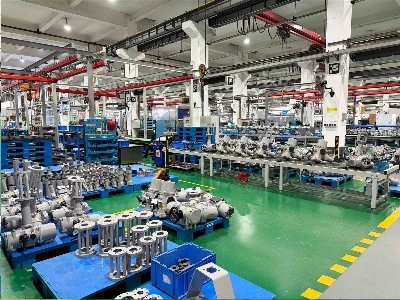
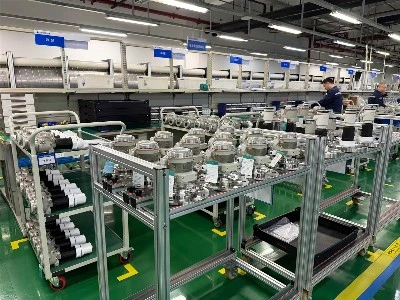
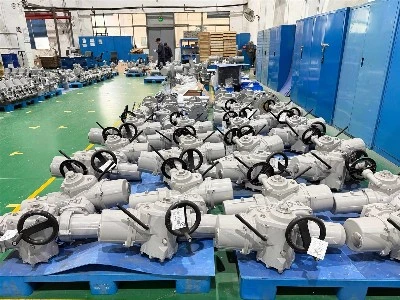

Looking for an RF admittance level switch factory for liquid, slurry, powder or granular material detection?
Send us your material information, probe length, process temperature, pressure and required output signal. Our team can help review the configuration and provide a suitable quotation.
Contact our team for product details, configuration support and an RF admittance point level switch quotation.
Hot Tags: ras series rf admittance level switch, China ras series rf admittance level switch manufacturers, suppliers, factory