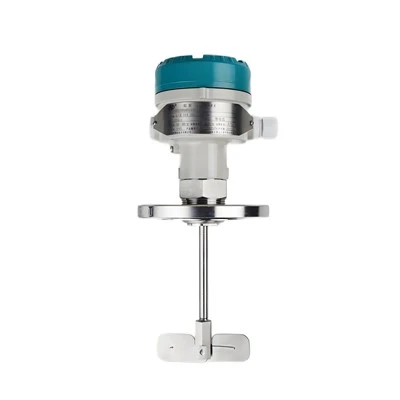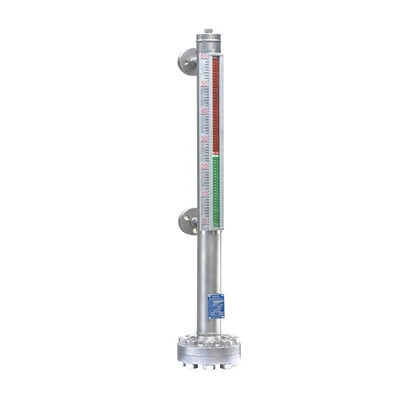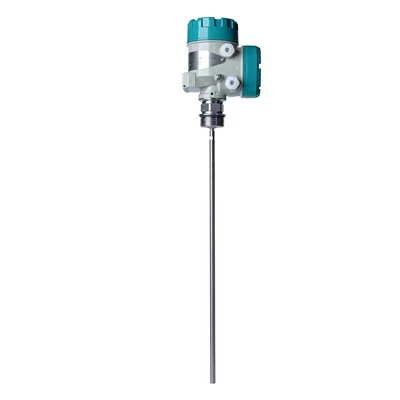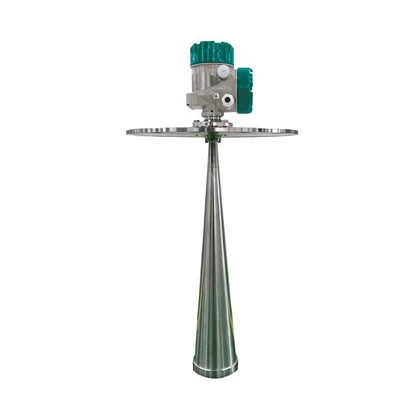


Key Features of VS Series Tuning Fork Level Switch
Adaptable to Different Materials
Detection is not affected by differences in material dielectric properties or density, according to the product source.
Reliable Detection
Designed to operate in conditions involving buildup, agitation, turbulence, bubbles, vibration, high temperature, and high pressure.
Maintenance-Free Operation
Electronic detection with no moving mechanical parts. No routine field adjustment is required for different material electrical properties or densities.
Wide Application Range
Suitable for powder and small-particle detection, as well as point-level monitoring of slurry, viscous, foaming, and corrosive liquids.
Tuning Fork Level Switch Typical Applications
| Industry | Typical Materials / Applications |
|---|---|
| Dust Collection | Blockage detection in inlet and outlet pipes; dust hopper level detection |
| Plastics & Rubber | Plastic powder, rubber powder |
| Food & Agriculture | Flour, grain, food products |
| Chemical Processing | Chemical products, viscous and corrosive liquids |
| General Industrial Processing | Small particles and bulk powder materials |
Choose the Right Sensing Type
The Tuning Fork Level Switch offers three sensing configurations. Select the type according to the material being detected.
| Sensing Type | Code | Suitable Materials | Minimum Probe Length |
|---|---|---|---|
| Liquid Tuning Fork | P | Liquids, including slurry, viscous, foaming, and corrosive liquids | 50 mm |
| Solid Tuning Fork | S | Powders and small particles | 200 mm |
| Vibrating Rod | R | Solid materials | 140 mm |
Typical selection guidance:
Liquid applications: Choose the P type for liquid point-level detection.
Powder and small-particle applications: Choose the S type.
Other solid-material applications: The R type vibrating rod is available as an alternative.
Tuning Fork Level Switch Probe Options
Probe Types

Cable type
Probe length over 0.5 m; top mounting only

Rod type
Probe length up to 4 m; lengths over 2 m require customization.
Vibrating Rod Level Switch Probe Materials
- 304 stainless steel
- 316L stainless steel
- 316L with ECTFE lining on wetted parts
- 316L with PFA lining on wetted parts
Vibrating Rod Level Switch Technical Specifications
| Parameter | Specification |
|---|---|
| Power Supply | 18–36 V DC (ripple <100 mVp-p); 90–260 V AC, 50/60 Hz |
| Power Consumption | <0.8 W at 24 V DC; <5 VA at 240 V AC |
| Outputs | DPDT relay; 8 mA / 16 mA two-wire output |
| Relay Contact Rating | 5 A / 250 V AC |
| Alarm Delay | Adjustable, 0–20 s |
| Stability | 0.01%/°C |
| Maximum Process Pressure | 63 kgf/cm² |
| Process Temperature | -40°C to 250°C |
| Liquid Media Viscosity | ≤10,000 mm²/s (cSt) |
| Ambient Temperature | -40°C to 80°C; low-temperature version: -60°C to 80°C |
| Enclosure Protection | IP66 / IP67 |
| Cable Entry | M20 × 1.5 or 1/2" NPT, internal thread; cable diameter 6–12 mm |

VS Series Tuning Fork Level Switch Working Principle:
1. Vibrating: Piezoelectric ceramics excite the tuning fork to vibrate at its resonant frequency.
2. Material Contact: As the material contacts and gradually covers the tuning fork, its vibration frequency and amplitude change.
3. Output Signal: The electronic unit detects and processes these changes, converting them into a switching signal.

Tuning Fork Level Switch Factory
Pls fill the Ordering Information!
A complete order should specify the sensing type, housing, power supply and output, safety certification, probe material, probe type and length, process temperature, pressure, and connection.
Everything You Need to Know
Q1: What is the difference between a liquid tuning fork and a solid tuning fork?
The liquid tuning fork (P) is intended for liquid detection, while the solid tuning fork (S) is intended for powders and small particles. Their vibration frequencies and sensitivities are different.
Q2: Can the VS Series detect viscous or foaming liquids?
Yes, Liquid Tuning Fork Level Switch detects slurry, viscous, foaming, and corrosive liquids as typical applications for liquid point-level detection. The liquid tuning fork has a stated maximum media viscosity of 10,000 mm²/s (cSt)
Q3: Does the tuning fork level switch require field calibration?
Our tuning fork level switch not required field calibration for different material electrical properties or densities.
Q4: Is an explosion-proof version available?
Yes. The available combinations depend on the selected power supply and output.
Tuning Fork Level Switch Manufacturer


Level Switch Safety Certifications


Looking for a Industrial Level Switch for your process?
Send us the following information:
- Material and its physical properties
- Liquid or solid detection
- Operating temperature and pressure
- Required probe length
- Process connection
- Power supply and output
- Required safety certification
Contact our team for product selection, configuration confirmation, and a quotation.
Level transmitter Supplier & Manufacturer Information
As an industrial level instrument supplier, we support product selection, configuration coordination, and export service. If you are searching for the level guage,contact us with your application details to discuss the suitable VS configuration.
Hot Tags: vs series tuning fork level switch, China vs series tuning fork level switch manufacturers, suppliers, factory