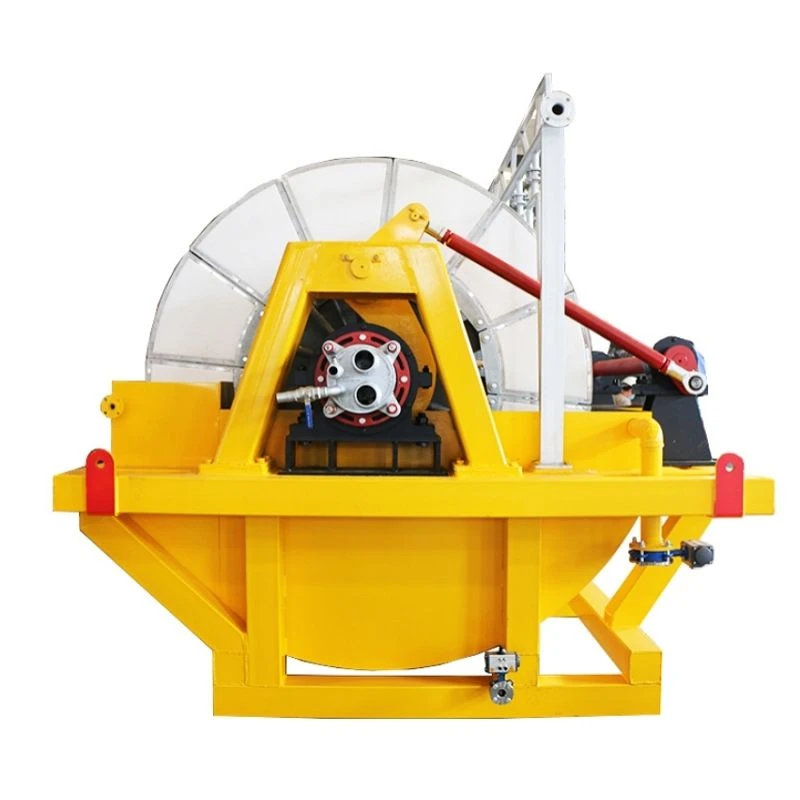
Industrial Dewatering Is Moving Toward More Efficient Filtration
As green mining and energy-efficiency initiatives continue to develop, mineral processing plants are paying increasing attention to efficient and reliable dewatering technologies. Traditional methods such as natural drying and energy-intensive thermal drying can require considerable time, space, or energy. As a result, mechanical dewatering is increasingly used to improve process efficiency and reduce the load on downstream drying operations.
Within this transition, ceramic vacuum filters and disc vacuum filters are widely considered for solid-liquid separation applications in mining, metallurgy, chemical processing, and other industries. The most suitable filtration technology depends on the material characteristics, required capacity, target cake moisture, and overall process conditions.
Different Technologies for Different Applications
Ceramic vacuum filters and disc vacuum filters use different filtration approaches and can therefore suit different materials and operating requirements.
The core of a ceramic vacuum filter is its microporous ceramic filter plate. The hydrophilic ceramic surface allows liquid to pass through while retaining solid particles on the filtration surface. Under suitable operating conditions, this design can produce relatively low-moisture filter cake and clear filtrate. The ceramic plates can also be regenerated through backwashing, chemical cleaning, and other cleaning methods according to the characteristics of the processed material.
Ceramic vacuum filters are commonly considered for dewatering applications involving metal concentrates such as copper, iron, and gold concentrates, as well as selected chemical and industrial materials, including gypsum slurry and kaolin.
A disc vacuum filter, on the other hand, uses multiple filter discs mounted on a rotating shaft. Its large filtration area and continuous operating principle make it suitable for applications requiring continuous dewatering and relatively high processing capacity. Depending on the material and equipment configuration, disc vacuum filters can be used for materials such as quartz, mica, feldspar, mineral powders, fly ash, electrolytic residues, and other industrial slurries.
Broad Industrial Applications
Both ceramic vacuum filters and disc vacuum filters can be applied to a wide range of solid-liquid separation processes. In mineral processing, applications may include the dewatering of copper, iron, gold, silver, tin, lead, zinc, molybdenum, chromium, manganese, sulfur, phosphorus, and silicon-containing materials, depending on their filtration characteristics.
In chemical and industrial applications, filtration requirements may involve materials such as zinc oxide, lead oxide, zinc sulfide, gypsum slurry, sludge, barium sulfate, leaching residues, slag, and ash.
The key point is that there is no single filtration solution suitable for every material. Slurry concentration, particle size, permeability, viscosity, required capacity, target cake moisture, and filtrate quality all influence equipment selection.
For this reason, the selection of a ceramic vacuum filter or disc vacuum filter should be based on the actual material and process requirements rather than equipment type alone. A properly matched filtration system can help improve dewatering performance, control operating costs, and support more stable long-term plant operation.