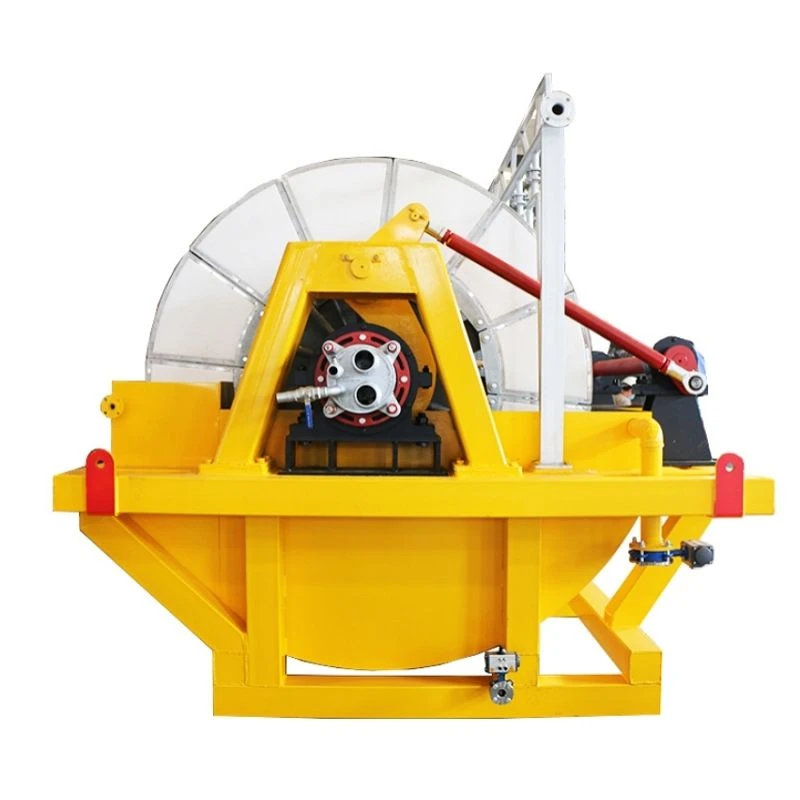
How a Disc Vacuum Filter Is Manufactured: From Components to Finished Equipment
When evaluating a new disc vacuum filter, buyers usually focus on specifications, filtration area, processing capacity, and expected performance. However, the reliability of industrial filtration equipment also depends heavily on how it is designed, manufactured, assembled, and tested.
From raw materials to final inspection, each stage of production plays a role in the equipment's long-term performance. Here is a closer look at the main manufacturing steps of a disc vacuum filter.
Step 1: Engineering Design and Material Preparation
The manufacturing process begins with engineering drawings and equipment design. Engineers review the equipment structure, dimensions, filtration system, transmission components, and control system before production begins.
The design process considers not only the required filtration performance but also equipment strength, manufacturing requirements, maintenance access, and installation conditions.
Once the drawings are confirmed, steel plates, profiles, and other required materials are prepared according to the equipment specifications. Cutting and machining equipment is then used to produce components to the required dimensions, providing a suitable foundation for subsequent welding and assembly.
Step 2: Fabrication, Welding, and Electrical Assembly
The processed components are transferred to different production stations for fabrication and welding. Structural components are assembled according to the engineering drawings, with welding performed according to the required procedures.
Dimensional checks and visual inspections are carried out during fabrication to help ensure that the finished structure meets the design requirements. Proper fabrication is important for maintaining structural stability and the required airtightness of relevant vacuum components.
At the same time, the electrical control cabinet is assembled. Electrical components such as the PLC, contactors, variable-frequency drives, sensors, and other control devices are installed and wired according to the control drawings. Clear labeling and organized wiring make subsequent commissioning and maintenance more efficient.
Step 3: Manufacturing and Installation of Key Components
The filtration system is one of the most important parts of a disc vacuum filter. Filter discs and related filtration components are manufactured and assembled according to the equipment design.
The filtration surfaces must be properly installed and aligned to provide stable filtration performance during operation. Other key components, including the main shaft, transmission system, agitator, vacuum lines, and discharge mechanism, are also inspected and installed during this stage.
The discharge system is particularly important because it must remove the filter cake efficiently while allowing the filtration cycle to continue. For equipment using a scraper discharge system, the scraper position and operating condition are carefully adjusted during assembly.
Step 4: Final Assembly and Factory Testing
After the individual components are completed, the equipment enters the final assembly stage. The tank, filter discs, drive system, agitator, discharge system, vacuum components, and electrical control system are assembled into the complete machine.
During assembly, key connections and components are checked according to the equipment drawings and technical requirements.
Before shipment, the completed equipment undergoes factory inspection and commissioning. Depending on the equipment configuration, testing may include motor operation, transmission performance, filter disc rotation, vacuum system performance, scraper operation, electrical controls, and safety functions.
The control system is also checked to confirm that the relevant operating commands, monitoring functions, alarms, and interlocks work as required.
Factory testing helps identify potential issues before the equipment is delivered to the customer's site and provides an additional quality-control step before shipment.
Step 5: Final Inspection, Packaging, and Shipment
After factory testing is completed, the equipment undergoes a final inspection. Key components are checked, and necessary protective measures are applied before packaging.
For long-distance transportation, the equipment is properly secured using suitable packaging, wooden frames, or other protective structures according to its size and transportation requirements. Components that require additional protection are separately secured to reduce the risk of damage during handling and shipment.
The manufacturing process does not end when the equipment leaves the factory. Installation guidance, commissioning support, and technical assistance can also be provided according to the project requirements.
From Manufacturing to Reliable Operation
A disc vacuum filter is the result of multiple manufacturing stages rather than a single production process. Engineering design, material preparation, fabrication, filtration-component assembly, electrical integration, factory testing, and final inspection all contribute to the finished equipment.
For industrial buyers, understanding the manufacturing process can provide useful insight into equipment quality and supplier capabilities. A reliable filtration system should not only meet the required specifications but also be supported by consistent manufacturing processes and appropriate factory inspection.