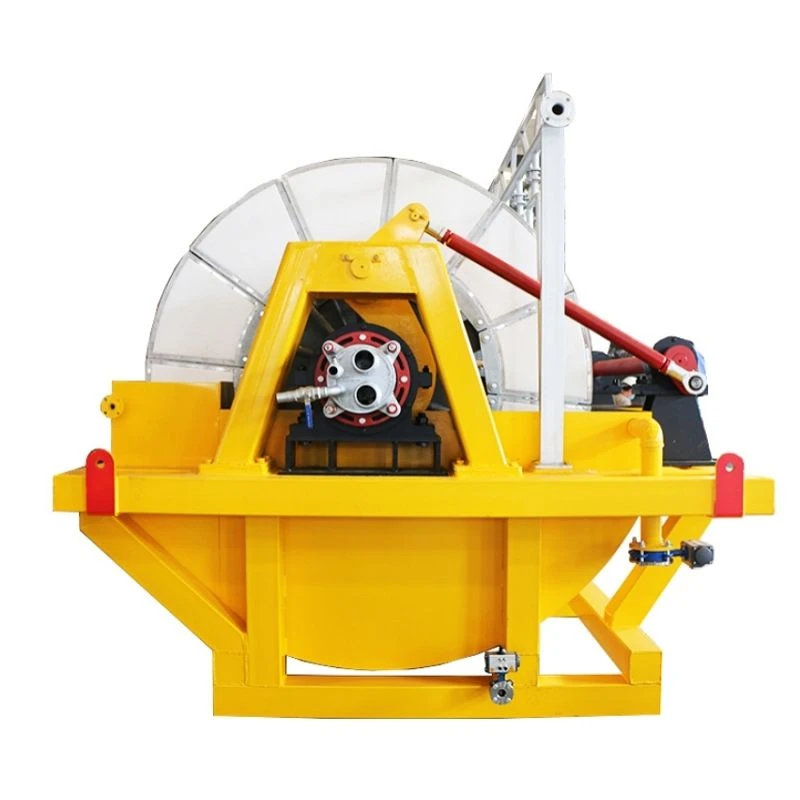
1. Turbid Filtrate
Causes:
* Damaged or aged filter cloth allows solid particles to penetrate and enter the filtrate.
* Inappropriate filter cloth selection; its pore size does not match the material particle size, failing to effectively trap particles.
* Abnormal filter press pressure; excessively high or low pressure can affect filtration efficiency, causing turbidity in the filtrate.
* Solutions:
* Inspect the filter cloth; replace any damaged or aged cloth promptly to ensure its integrity and filtration performance.
* Select a suitable filter cloth based on the material characteristics, ensuring its pore size effectively traps solid particles.
* Adjust the filter press pressure to the normal range, which can be achieved by adjusting the vacuum system or the feeding system.
2. Low Filtration Efficiency
Causes:
* Vacuum system malfunction, such as a damaged vacuum pump or leaking vacuum pipes, results in insufficient vacuum, affecting filtration speed.
* Filter cloth blockage; fine particles or impurities in the material adhere to the filter cloth surface, hindering liquid passage.
* Insufficient or uneven feed prevents the filter press from fully utilizing its filtration capacity.
Troubleshooting Methods:
1. Inspect the vacuum system: Repair or replace any damaged vacuum pumps, seal vacuum pipelines, and ensure the required vacuum level.
2. Regularly clean the filter cloth: Use methods such as back-blowing or chemical cleaning to remove blockages.
3. Adjust the feeding system: Ensure sufficient and uniform feeding to improve filtration efficiency.
3. High Moisture Content in Filter Cake:
Causes:
Insufficient vacuum level, unable to fully absorb moisture from the filter cake.
Insufficient filtration time, the filter cake has not undergone sufficient dehydration.
Poor filter cloth performance, unable to effectively retain moisture, or the filter cloth surface is too smooth, hindering moisture drainage.
Troubleshooting Methods:
Increase the vacuum level. Check the vacuum system and troubleshoot any faults to ensure the vacuum level is stable within the appropriate range.
Extend the filtration time appropriately to allow sufficient time for dehydration of the filter cake.
Replace with a higher-performance filter cloth, selecting one with suitable surface roughness and porosity to improve dehydration efficiency.
Turning to a higher-performance filter cloth: Select filter cloth with suitable surface roughness and porosity to improve dehydration performance.
4. Excessive Equipment Noise
Causes:
1. Loose equipment components, such as loose bolts connecting bearings and gears, causing vibration and noise during operation.
2. Worn transmission components, such as severely worn chains and belts, resulting in friction and impact noises during operation.
3. Unstable equipment installation or an unstable foundation, causing shaking and noise during operation.
Solutions:
1. Inspect the connections of all equipment components, tighten loose bolts, and ensure components are securely installed.
2. Replace worn transmission components, such as chains and belts, to ensure the normal operation of the transmission system.
3. Readjust the equipment's installation position and reinforce the foundation to ensure stable installation and reduce shaking and noise during operation.