Choosing the right level meter is essential for accurate level measurement, stable process operation, and reliable equipment performance. However, different materials and operating conditions require different measurement technologies. A radar level meter suitable for a large storage tank may not be the best choice for a small water tank or a dusty powder silo.
As an industrial measurement instrument supplier, ZHONGYU provides level measurement solutions for different industrial applications. This guide explains how to select a suitable level meter based on the measured material, operating conditions, installation environment, and measurement requirements.
1. Start with the Material: Liquid or Solid?
The first step in selecting a level measurement instrument is to identify the material being measured.
For liquid applications, consider:
- Clean water or wastewater
- Chemical liquids
- Oil and other industrial liquids
- Liquids with foam or surface fluctuations
- Liquids in tanks with internal structures
For solid applications, consider:
- Powder materials
- Granules
- Mineral ores
- Coal and coke
- Materials with dust or uneven surfaces
The material's physical properties, dielectric characteristics, density, and surface conditions may affect measurement performance. Therefore, selecting a level meter based only on the tank height or measuring range is not sufficient.
2. Match the Level Measurement Technology to Your Application
Different level meters use different measurement principles. Understanding their application conditions helps narrow down the options.
Radar Level Meter
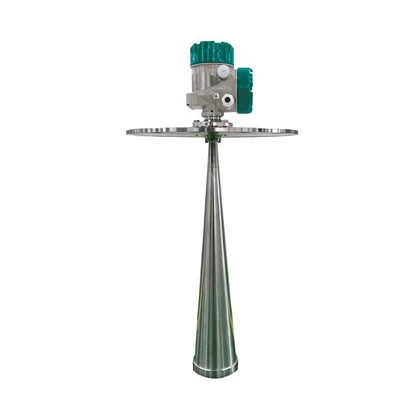
A radar level meter is used for continuous level measurement of liquids and solids. Different radar models have different frequency ranges, antenna configurations, and application conditions.
For example, the MPS7000 series frequency-modulated radar level meter uses D-band technology at approximately 120 GHz, with a maximum measuring range of 120 m according to the product documentation.
When selecting an industrial radar level meter, consider the material, measuring distance, tank structure, and installation conditions.
Guided Wave Radar Level Transmitter
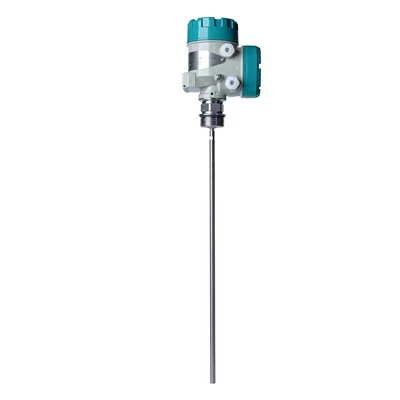
A guided wave radar level transmitter measures the level through high-frequency pulses traveling along a probe.
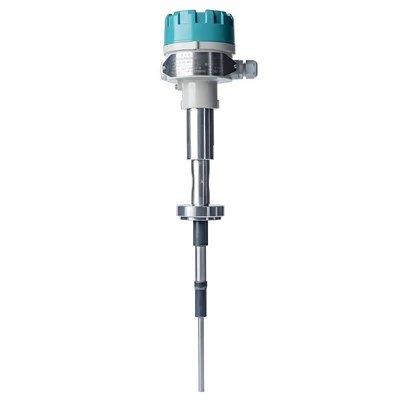
The ZHONGYU MGS Series Guided Wave Radar Level Transmitter offers cable, rod, and coaxial probe configurations for different installation requirements.
It can be considered for applications involving surface foam. Probe selection should be based on the measuring range, material characteristics, process connection, and available installation space.
Ultrasonic Level Meter
An ultrasonic level meter is another option for non-contact level measurement. When considering an ultrasonic level transmitter, the actual application conditions and product specifications should be checked carefully.
Do not select an ultrasonic instrument simply because it is a non-contact device. Confirm that the model is suitable for the material and operating environment.
Hydrostatic Level Transmitter
A hydrostatic level transmitter measures liquid level based on the relationship between liquid pressure, density, and liquid column height.
According to the product documentation, the MTP Series submersible hydrostatic level transmitter can be used in applications such as water treatment, reservoirs, deep wells, and other liquid-level measurement situations under atmospheric pressure.
When selecting a hydrostatic level sensor, pay attention to liquid density, measuring depth, probe structure, and installation conditions.
RF Admittance Level Meter
An RF admittance level meter can be considered for applications where material buildup on the probe is a concern. The MCS Series uses a design intended to reduce the influence of material coating on the probe.
The actual suitability depends on the material properties and operating conditions.
Magnetic Level Gauge and Other Contact Instruments
For certain liquid-level applications, contact-type instruments may also be appropriate.
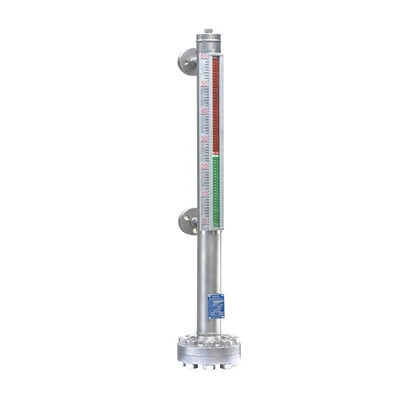
Depending on the application, options in the product range include magnetic level gauges, magnetic float level meters, float-type level transmitters, glass plate level gauges, and magnetostrictive level transmitters.
The selection should consider the liquid properties, tank configuration, required indication or output, and process connection.
3. Consider the Actual Operating Conditions
A level meter may perform differently under different process conditions, even when measuring the same material.
Before choosing a model, check the following factors:
Foam: Foam on the liquid surface may affect some measurement methods. For applications with foam, consider whether a guided wave radar model is suitable.
Dust: Heavy dust in powder silos should be considered when selecting a non-contact level measurement instrument.
Steam: Steam inside a tank may affect measurement conditions. Check the instrument's specified application limits.
Agitation: Mixing equipment can cause liquid surface fluctuations. Consider the installation position and the instrument's measuring performance under disturbed conditions.
Material buildup: Sticky materials may accumulate on probes or instrument components. Check whether the selected model has a suitable probe design.
For example, the MPS3101 pulse radar level meter is listed for applications such as circulating water, fire water, tap water, and water treatment, under normal temperature and pressure conditions without steam, foam, or agitation.
This illustrates why selecting a level meter according to the actual operating environment is important.
4. Select the Measuring Range and Probe Configuration
The measuring range should match the actual tank height and required measurement position.
For guided wave radar level transmitters, different probe types provide different measuring ranges:
| Probe Type | Measuring Range |
|---|---|
| Cable Probe | 0.3–20 m |
| Rod Probe | 0.3–4 m |
| Coaxial Probe | 0.1–4 m |
These ranges are based on the MGS Series product documentation. The final selection should also consider the material, tank structure, and installation conditions.
For radar level meters, antenna configuration and measuring range should also be considered. For example, the MPS3000 series includes different antenna options for liquid and solid applications.
Do not choose a model based only on its maximum measuring range. The actual operating conditions and installation environment also matter.
5. Check the Tank Structure and Installation Position
The tank structure can directly affect instrument installation and measurement performance.
Before purchasing a level measurement instrument, check:
- Tank height and diameter
- Tank shape and internal structures
- Available installation openings
- Nozzle diameter and height
- Distance from the measuring point to the tank wall
- Presence of agitators, pipes, or other obstacles
For guided wave radar, the probe length and type must match the available installation space.
For non-contact radar instruments, the antenna position and possible obstructions should be checked.
For applications where installation space is limited, the process connection and mounting configuration should be confirmed before ordering.
6. Confirm Process Conditions and Material Compatibility
The instrument must be suitable for the actual process conditions.
Important parameters include:
- Operating temperature
- Operating pressure
- Corrosiveness of the measured medium
- Required housing and protection rating
- Wetted material compatibility
- Process connection type and size
For example, a level transmitter used in a chemical tank may require different wetted materials from one used in a water tank.
For high-temperature or high-pressure applications, confirm the allowable operating range of the specific model and configuration.
ZHONGYU recommends confirming these details before selecting a level meter manufacturer or supplier for your project.
7. Continuous Level Measurement or Point Level Detection?
Another important selection factor is whether you need continuous measurement or point-level detection.
A continuous level meter provides ongoing information about the material level. Common instrument options include:
- Radar Level Meter
- Guided Wave Radar Level Transmitter
- Ultrasonic Level Transmitter
- Hydrostatic Level Transmitter
- Magnetostrictive Level Transmitter
- Magnetic Level Gauge
These instruments can be selected according to the required measurement method and process conditions.
Point Level Detection
A level switch is used to detect whether material has reached a specific level or position. It does not provide the same continuous level information as a level transmitter.
The product range includes different point-level detection options, such as:
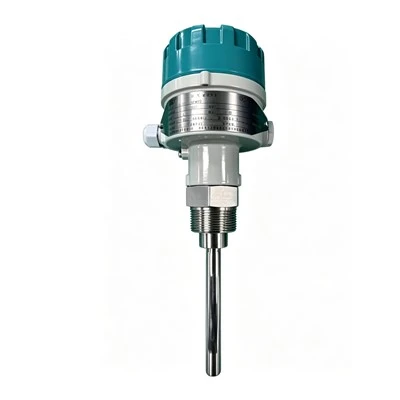
- RF Admittance Level Switch
- Tuning Fork Level Switch
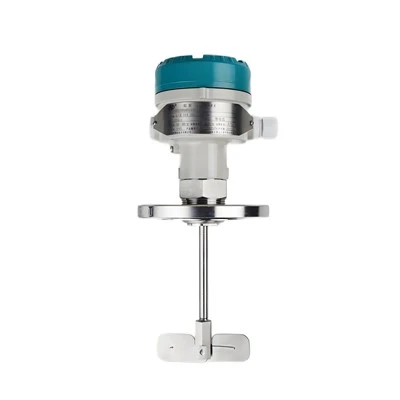
- Rotary Paddle Level Switch
- Microwave Level Switch
The selection depends on whether the measured material is liquid or solid and the required switching function.
8. Common Mistakes When Selecting an Industrial Level Meter
Several common mistakes can lead to unsuitable instrument selection:
- Choosing only by measuring range: A model with sufficient range may still be unsuitable for the material or operating conditions.
- Ignoring surface conditions: Foam, agitation, dust, and material buildup should be considered before selecting the measurement technology.
- Overlooking installation limitations: Tank nozzles, internal structures, and available mounting space may affect instrument installation.
- Ignoring material compatibility: Wetted materials and process connections must match the measured medium and process conditions.
- Confusing level transmitters with level switches: Confirm whether the project requires continuous measurement or point-level detection.
A complete selection should consider the instrument, the measured material, and the actual installation environment together.
9. What Information Should You Provide Before Requesting a Level Meter Quote?
To help a level meter supplier recommend a suitable model, prepare the following information:
| Information | Details to Provide |
|---|---|
| Measured Material | Liquid, powder, granules, slurry, etc. |
| Measuring Range | Tank height and required measuring range |
| Operating Temperature | Normal and maximum temperature |
| Operating Pressure | Normal and maximum pressure |
| Tank Information | Tank type, diameter, and height |
| Surface Conditions | Foam, dust, steam, agitation, or buildup |
| Installation | Top mounting, side mounting, or other arrangements |
| Process Connection | Thread, flange, size, and standard |
| Output Signal | 4–20 mA, HART, RS485, or other requirements |
| Other Requirements | Protection rating, materials, and certifications |
Providing these details helps reduce unnecessary model comparisons and makes the selection process more efficient.
10. Find the Right Level Measurement Solution with ZHONGYU
Selecting the right industrial level meter is not simply about choosing a product with a suitable measuring range. Material characteristics, operating conditions, tank structure, installation requirements, and output signals all need to be considered.
ZHONGYU offers a range of industrial level measurement instruments, including radar level meters, guided wave radar level transmitters, hydrostatic level transmitters, and other level measurement products.
Whether you are looking for a level meter manufacturer, industrial level meter supplier, radar level transmitter factory, or a suitable level measurement instrument for a new project, providing your application details is the first step toward selecting the right model.
Contact ZHONGYU with your process requirements to discuss suitable level measurement options for your application.